
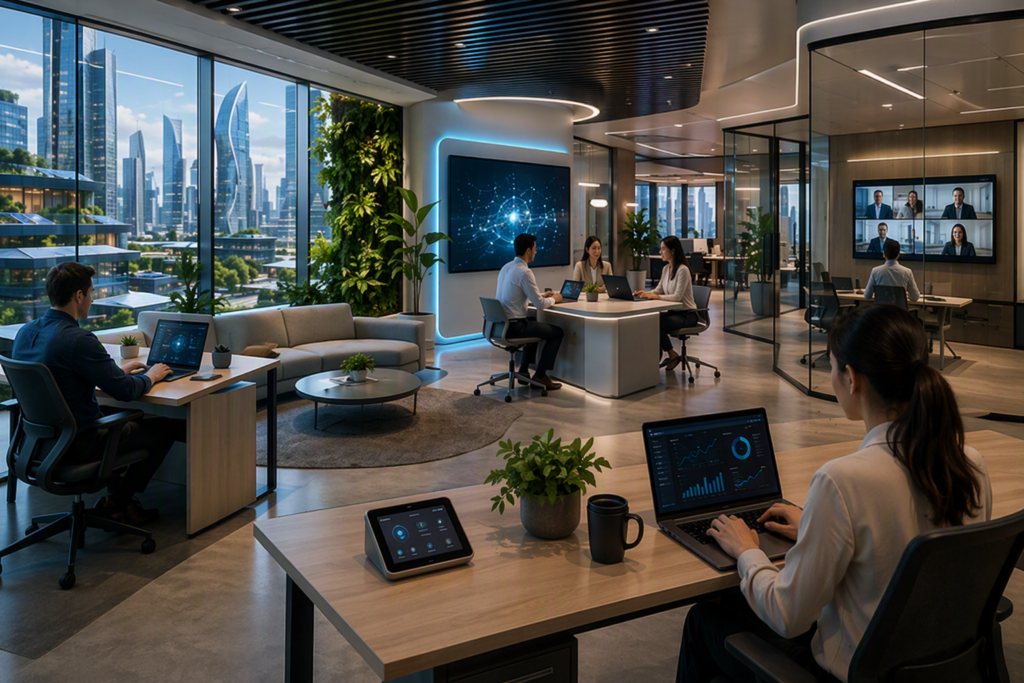
In our previous article, Measuring Hybrid Workplace Success, we explored how organizations can use data, employee feedback, and workplace analytics to determine whether their hybrid work strategy is delivering results. Measurement is essential—but it’s only the beginning.
The reality is that hybrid work continues to evolve. Technology is advancing, employee expectations are changing, and businesses are discovering new ways to balance flexibility, productivity, collaboration, and culture. The organizations that will thrive in the years ahead are not those with the most rigid workplace policies, but those willing to adapt and innovate.
The question is no longer whether hybrid work is here to stay. The question is: How do we design workplaces that are ready for what’s next?
AI-Enhanced Collaboration Is Transforming Hybrid Work
Artificial intelligence is rapidly becoming a key component of the modern workplace. AI-powered tools can automate administrative tasks, summarize meetings, improve knowledge sharing, and help teams stay aligned regardless of location.
According to Microsoft’s Work Trend Index, organizations are increasingly adopting AI technologies to enhance productivity, collaboration, and decision-making across distributed teams. Microsoft research indicates that leaders are making AI a strategic priority as they look for new ways to empower employees and improve operational efficiency.
For organizations embracing hybrid work, AI can help level the playing field between remote and in-office employees by ensuring everyone has equal access to information, documentation, and collaboration opportunities. Instead of spending time searching for information or manually coordinating tasks, employees can focus more energy on problem-solving, innovation, and customer service.
Businesses looking to maximize these opportunities often benefit from strategic technology planning and alignment. A Virtual CIO (vCIO) can help organizations identify the right technology investments and ensure workplace technology supports long-term business objectives.
Smart Offices Are Becoming Experience Centers
The office is no longer simply where work happens. In a successful hybrid work model, the office should provide experiences that are difficult to replicate remotely.
Smart office technologies—including occupancy sensors, room scheduling platforms, workplace analytics, and intelligent environmental controls—allow organizations to better understand how employees use physical spaces and how those spaces can be optimized.
Rather than assigning every employee a desk that may sit empty for much of the week, forward-thinking organizations are redesigning workplaces around collaboration, innovation, training, mentorship, and team engagement. The office becomes a destination for purposeful interaction rather than a default location for individual work.
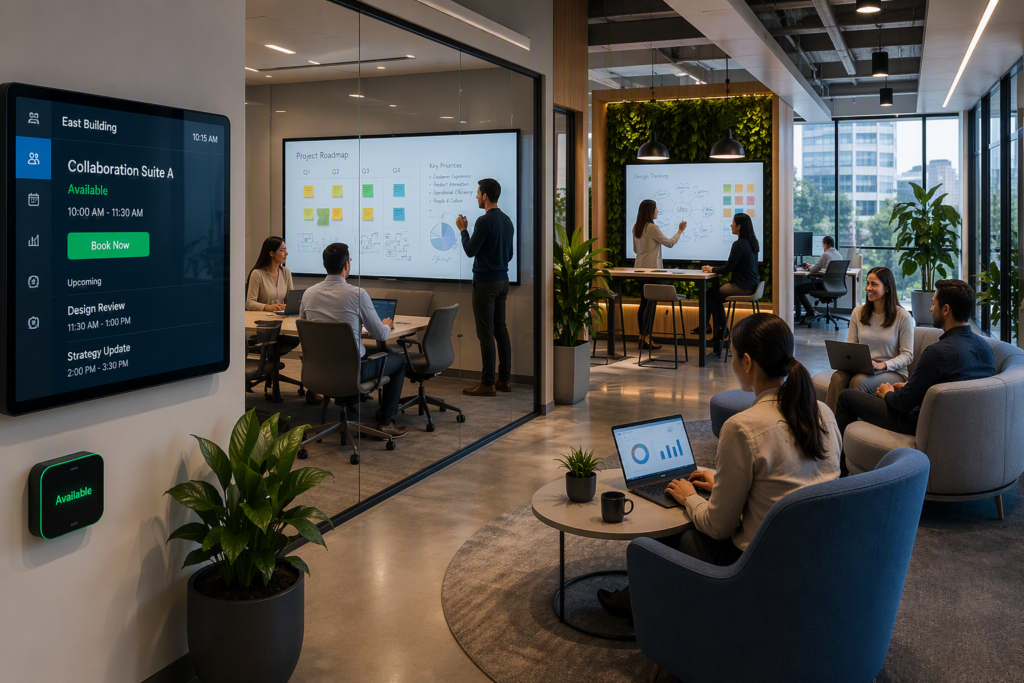
Organizations seeking to modernize workplace technology, networking, communications, and collaboration platforms can benefit from Sound Power’s IT Services offerings, which help create the technical foundation required for a modern hybrid work environment.
Employee Expectations Will Continue to Evolve
One lesson has become increasingly clear: employee expectations are not static.
Today’s workforce values flexibility, autonomy, work-life balance, and meaningful connections with colleagues. Employees want the freedom to work where they are most productive while maintaining access to the people, resources, and culture that help them succeed.
As hybrid work continues to mature, organizations must regularly reassess employee needs through surveys, feedback sessions, workplace analytics, and ongoing conversations. What employees wanted three years ago may not be what they need today, and what works for one generation of workers may not resonate with another.
Leaders who actively listen to employees are far more likely to create workplace experiences that improve engagement, retention, and performance. The organizations that excel in hybrid work will be those that treat employee feedback as a strategic asset rather than a periodic exercise.
Continuous Experimentation Is the New Standard
One of the biggest mistakes organizations can make is treating hybrid work as a project with a final destination.
The most successful organizations understand that workplace strategy is never complete. Instead, it requires ongoing experimentation, measurement, and refinement. Just as businesses continuously improve products and services, they should continuously evaluate how work gets done.
This might involve testing new collaboration technologies, adjusting in-office schedules, redesigning meeting spaces, introducing AI-powered productivity tools, or rethinking communication practices between remote and on-site employees. Small changes often produce valuable insights that can lead to significant improvements in employee experience and business outcomes.
The key is to create a continuous cycle of learning:
- Introduce a change or new capability.
- Collect employee feedback and workplace data.
- Measure the impact on productivity, engagement, and collaboration.
- Adjust based on what the organization learns.
- Repeat.
Organizations that embrace this mindset avoid becoming locked into workplace policies that no longer serve their people or business objectives. Instead, they remain agile and responsive as technology, market conditions, and workforce expectations evolve.
Continuous experimentation also builds trust. Employees are more likely to support workplace initiatives when they see leadership actively listening, gathering feedback, and making improvements based on real-world results rather than assumptions. Over time, this creates a culture of innovation where teams feel empowered to suggest better ways of working.
This is why reliable technology operations are more important than ever. A strong Managed IT Support partner can help ensure workplace technologies remain secure, scalable, and responsive as organizations continue refining their hybrid work strategies. Organizations can also leverage broader IT Services to provide the infrastructure, security, and expertise necessary to support ongoing workplace innovation.
Ultimately, the future of hybrid work belongs to organizations that are willing to test, learn, and adapt. The goal is not to find the perfect workplace model—it’s to build a workplace that can evolve as quickly as the people and business it supports.
Build a Workplace That Grows With Your People
The future of hybrid work isn’t about predicting every trend. It’s about creating an organization that can adapt as trends emerge.
That means investing in:
- Flexible technology platforms
- Data-driven workplace decisions
- Employee-centered experiences
- Smart workplace infrastructure
- Continuous learning and improvement
Organizations that embrace adaptability will be able to respond more effectively to changing business conditions while continuing to support employee success.
Most importantly, they’ll create workplaces that evolve alongside the people who use them. As teams grow, priorities shift, and technology advances, the workplace should be capable of growing and adapting without requiring a complete reinvention every few years.
Looking Ahead
The future of hybrid work will not be defined by a single technology, policy, or office design. It will be shaped by organizations that continuously learn, adapt, and improve.
AI-enhanced collaboration, smart offices, and evolving employee expectations are already changing how work gets done. Companies that embrace these changes—and build flexibility into both their technology and culture—will be best positioned for long-term success.
The organizations that succeed won’t view hybrid work as a challenge to overcome. They’ll view it as an opportunity to create a better employee experience, improve business performance, and build a more resilient future.
Takeaway: The best hybrid work environments are never “finished.” They continuously evolve, adapt, and improve to meet the changing needs of employees, customers, and the business itself.


