
Hybrid work didn’t emerge because it was fashionable—it emerged because it worked. What began as an emergency response has now stabilized into a long‑term operating model for organizations around the world. Data from the past several years makes one thing clear: hybrid work isn’t fading. It’s becoming the default.
According to the U.S. Bureau of Labor Statistics, more than 33 million Americans now engage in some form of telework, with hybrid work representing the largest share of remote‑capable roles. This balance has remained steady since 2023, signaling that hybrid work is no longer a transitional phase—it’s a permanent shift in how work gets done.
From Remote-First to Hybrid-by-Design
Early remote work was largely unplanned. Companies focused on continuity, not design. Today, organizations are shifting from remote-first to hybrid‑by‑design.
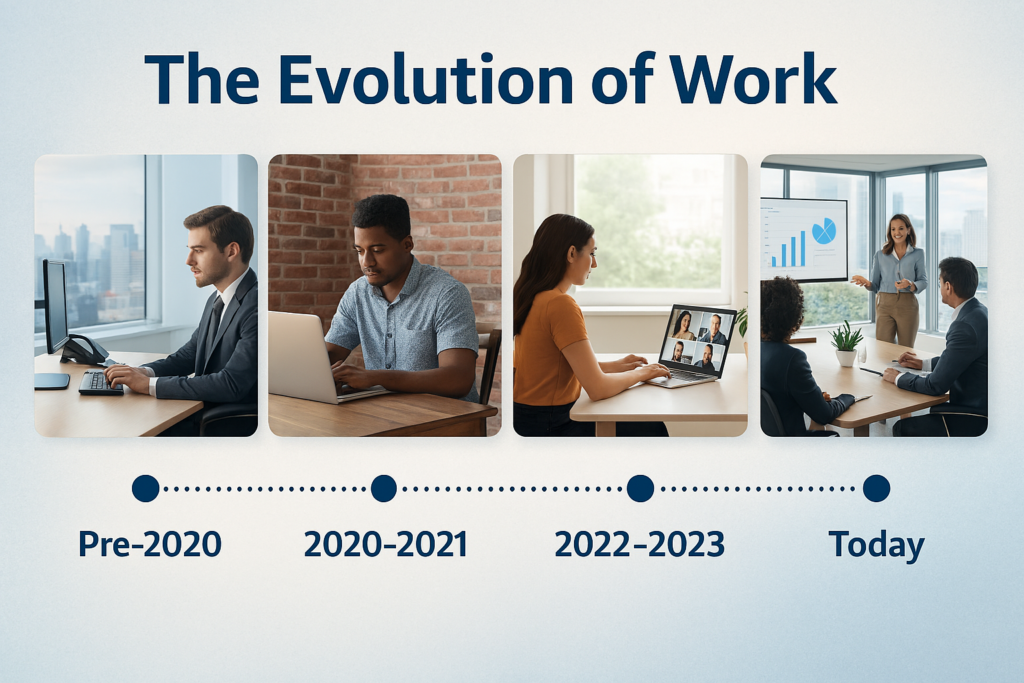
Research shows this transition is well underway:
- 64% of leaders report their organizations now operate under a hybrid model
- 75% of organizations expect their work model to continue evolving, not reverting
- 95% of companies have already made offices more flexible, with redesign efforts ongoing
Hybrid‑by‑design means aligning work modes to outcomes—deciding intentionally what work benefits from in‑person energy versus remote focus.
The Business Benefits of Hybrid Work
Flexibility and Resilience
Organizations with hybrid models are more adaptable during disruption. A global study of employers found that 82% plan to further increase workplace flexibility, citing resilience and business continuity as key drivers.
Expanded Talent Access
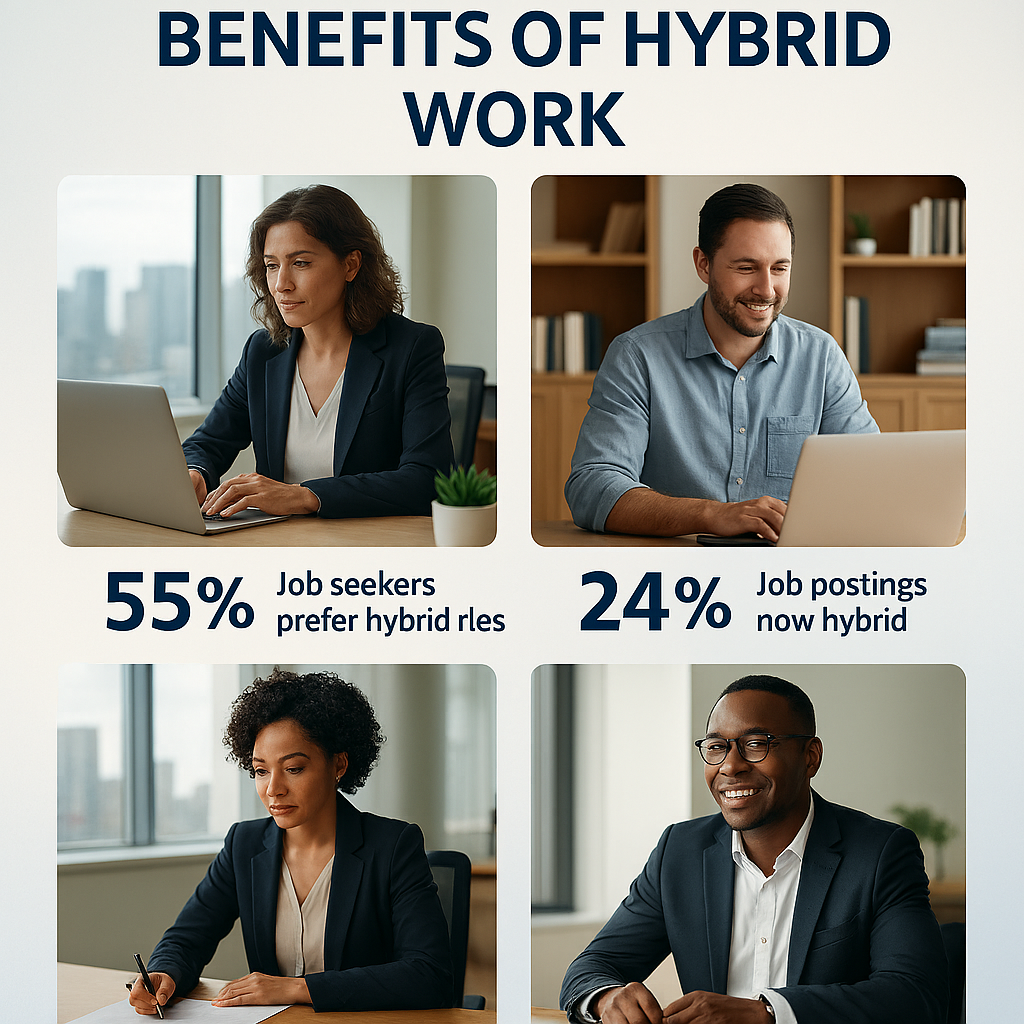
Hybrid work unlocks access to broader talent pools:
- 55% of job seekers rank hybrid as their top preference when evaluating new roles
- Hybrid job postings grew from 9% in 2023 to 24% by late 2025
- Only 16% of professionals say an on‑site-only role is their ideal choice
Employers that limit flexibility limit their hiring pipeline.
Increased Productivity
Concerns that hybrid work would reduce output have been consistently disproven:
- 66% of managers report productivity improved after adopting hybrid work
- Studies estimate hybrid workers are 5–11% more productive than fully on‑site peers
- A Bureau of Labor Statistics analysis across 61 industries found total factor productivity growth increased alongside remote and hybrid adoption
Hybrid productivity improves when focus work and collaboration are intentionally separated.
The Employee Benefits of Hybrid Work
Autonomy and Engagement
Employees value choice:
- 84% of employees say they’re more productive outside the office
- Hybrid workers report higher engagement levels (35%) than fully remote (33%) and in‑office (27%) workers
Autonomy builds trust, and trust drives performance.
Focus and Well‑Being
Hybrid work supports sustained focus:
- 73% of hybrid employees report higher productivity, saving an average of 7.6 hours per week
- 76% of employees list improved work‑life balance as the top benefit of hybrid work
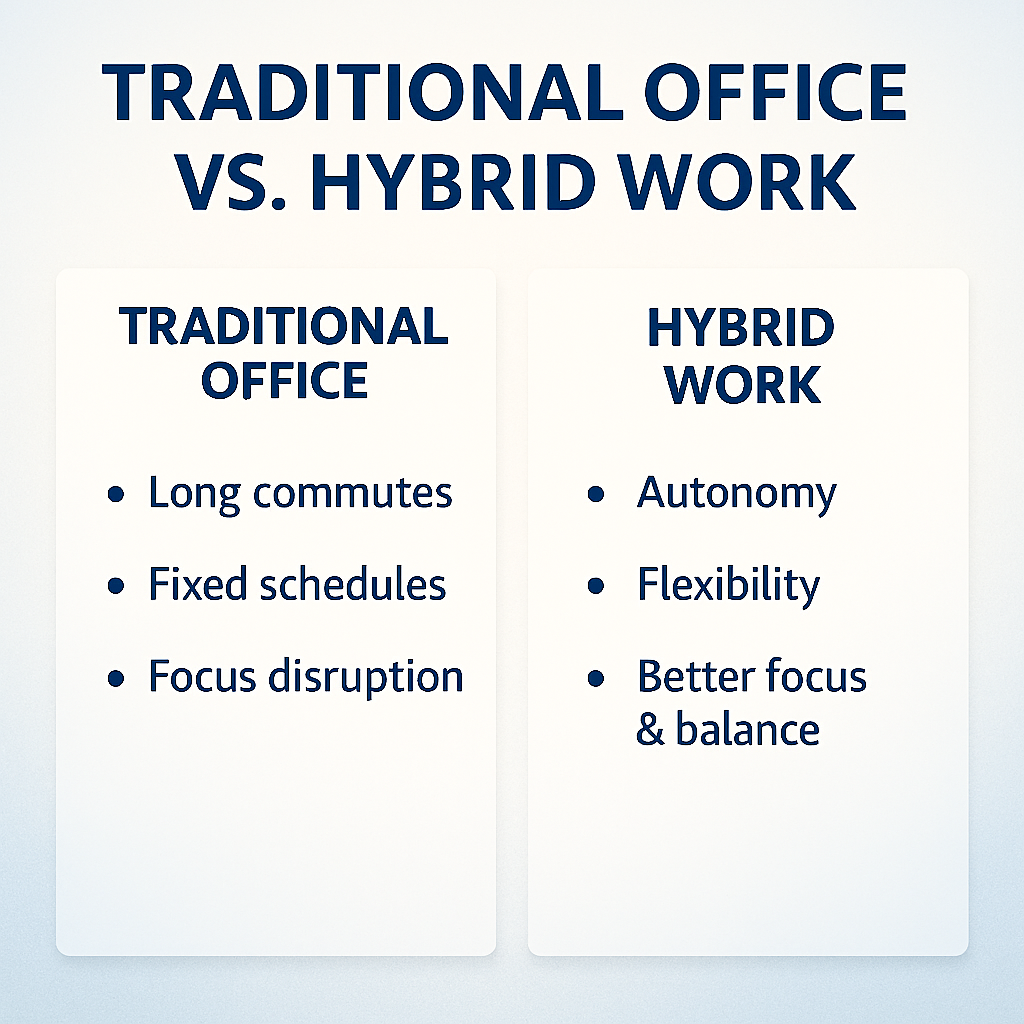
Better Work-Life Balance and Retention
The impact on retention is substantial:
- Hybrid work has been shown to reduce resignations by up to 33%
- 72% of hybrid workers say their work‑life balance has improved significantly
- 60% of employees say they would consider leaving if forced into full‑time office attendance
Hybrid work isn’t just about satisfaction—it’s about sustainability.
The Risk of “Accidental Hybrid”
Despite these benefits, many organizations struggle—not because hybrid work fails, but because it isn’t designed intentionally.
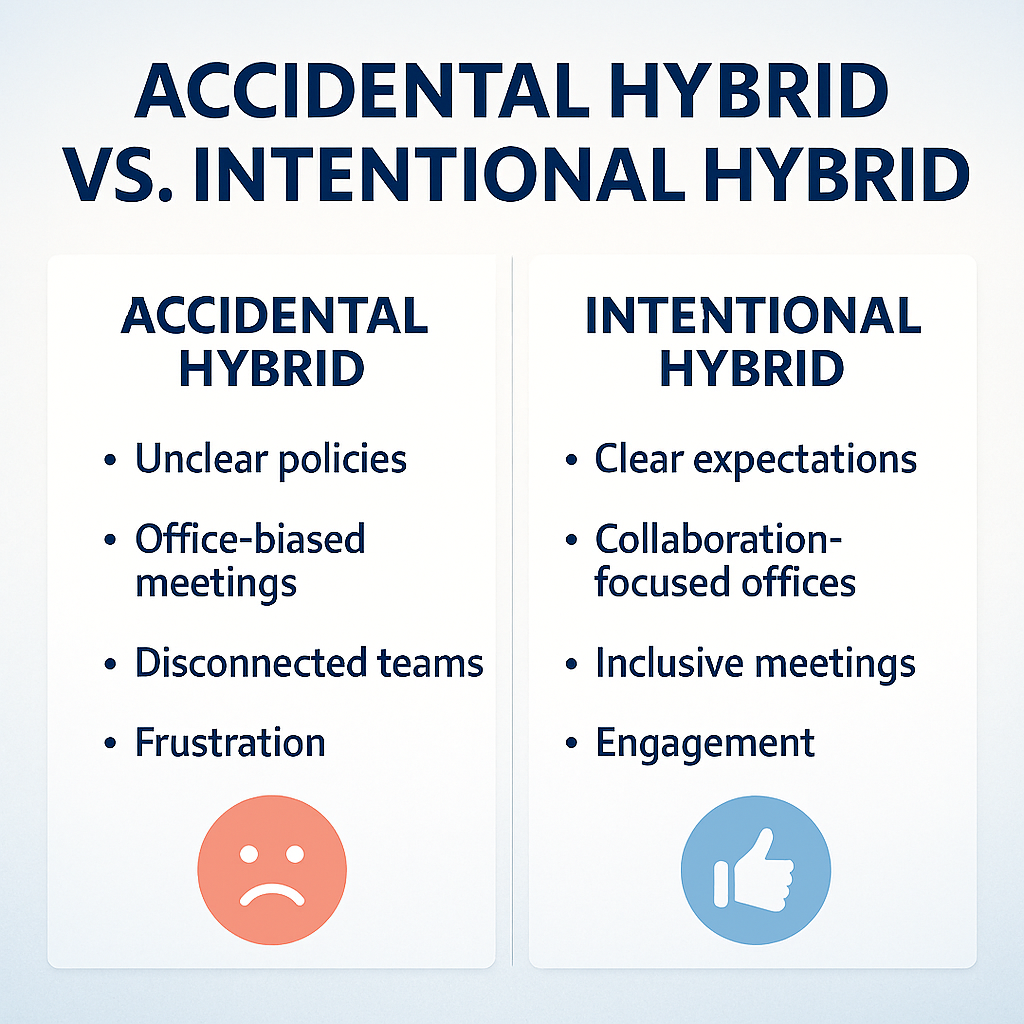
Warning signs of accidental hybrid include:
- Only 11% of employees say they were involved in shaping hybrid policies
- 58% of managers report feeling unprepared to lead hybrid teams
- Studies show hybrid teams with poor communication experience up to 28% lower productivity
When offices, technology, and leadership behaviors don’t evolve together, hybrid work creates inequity instead of advantage. This leads to employees resenting the workplace environment and your business loosing talent.
Intentional Hybrid Design Changes Everything
Organizations that succeed with hybrid work:
- Define clear expectations around in‑office and remote work
- Redesign offices for collaboration rather than individual desk work
- Invest in tools that deliver a consistent experience for every participant
- Train leaders to manage outcomes, not physical presence
Data from shows structured hybrid models deliver company‑wide productivity improvements averaging 11%—but only when designed with intention.
Hybrid Work Is a Competitive Advantage
Hybrid work has stabilized. It has proven its value. And employees have made their preferences clear.
Organizations that embrace hybrid work strategically will:
- Attract more talent
- Retain employees longer
- Improve productivity and resilience
- Build a healthier, more engaged workforce
Those that cling to pre‑pandemic models risk falling behind—not because hybrid work failed, but because they failed to adapt.
Takeaway:
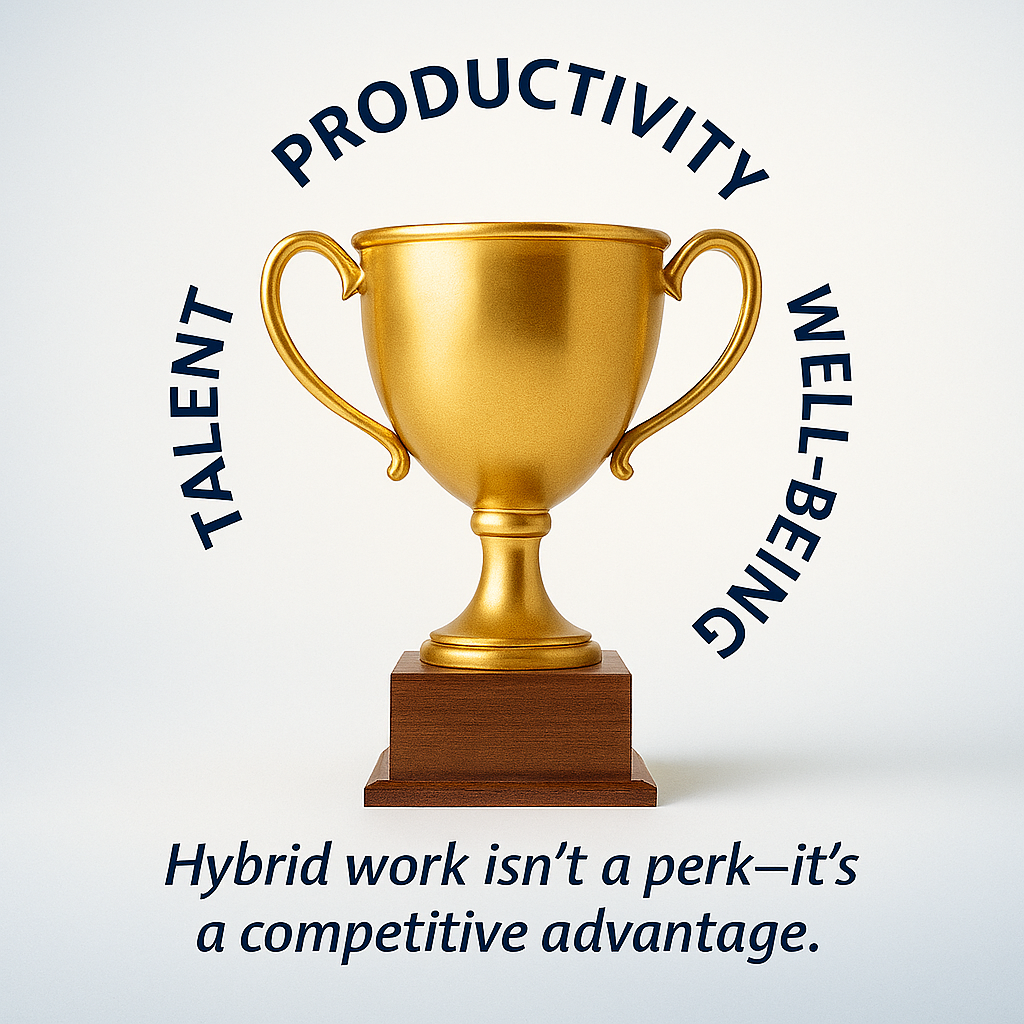
Hybrid work isn’t a perk—it’s a competitive advantage when done right.
Sources
- Gallup Workplace Engagement Reports
- Robert Half 2026 Labor Trends
- Zoom Hybrid Work Survey (2025)
- Gartner, McKinsey, and Stanford hybrid productivity studies
- HubStar & Owl Labs Hybrid Work Reports


