
In today’s business landscape, information is more than a resource—it’s a form of currency. Customer details, sales metrics, intellectual property, financial records, employee data, vendor contracts… these aren’t just digital files tucked away on a server. They are assets with real, measurable value. And just like cash in a physical till, information fuels daily operations, drives decision‑making, and keeps the business running.
But unlike cash, information is far easier to lose, leak, or steal—especially if it isn’t protected with intention.
Information Powers Every Modern Business

Whether you’re running a global enterprise or a small local shop, information sits at the center of everything your business does:
- Customer relationships
Purchase history and preferences help you personalize experiences and build loyalty. - Operational efficiency
Data helps you streamline processes, save money, and reduce downtime. - Strategic decision-making
Good data lets you forecast, plan, and stay ahead of competitors. - Innovation and competitive edge
Your unique ideas, internal processes, and digital assets are what set you apart.
This information is your business. Losing it—or having it fall into the wrong hands—can be just as damaging as losing hard currency.
If You Wouldn’t Leave the Cash Drawer Open… Don’t Leave Your Data Unprotected
Every business understands the need for physical security. You wouldn’t:

- Leave the till open and unattended
- Let strangers access the back office
- Skip counting the drawer at closing time
- Leave the store unlocked overnight
Yet many organizations unintentionally do the digital equivalent—through weak passwords, outdated software, unsecured networks, and a lack of training.
Cybercriminals don’t need physical access to your location. A single email, insecure login, or unprotected device can become their front door.
Modern Threats Target Data, Not Just Dollars
Attacks today are designed to steal or exploit information for financial gain. Common risks include:
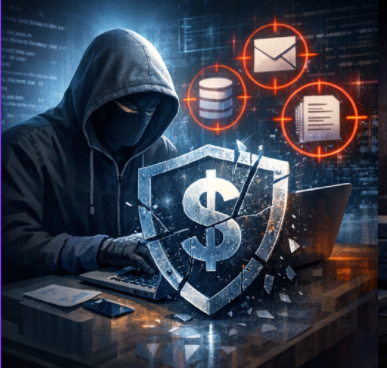
- Phishing attacks
- Ransomware that locks down your systems
- Insider misuse or accidental leaks
- Unsecured cloud storage or devices
- Social engineering attacks that trick employees
Unlike stolen cash, stolen data can be copied infinitely and used repeatedly amplifying the damage.
Practical Data‑Protection Tips for Small Businesses
Small businesses don’t always have large IT teams or enterprise-grade security budgets. The good news: strong protection doesn’t require either. These steps are accessible, affordable, and highly effective.
1. Start with strong, unique passwords
Use a password manager so employees don’t reuse simple passwords. Require multi‑factor authentication (MFA) wherever possible.
2. Keep software and devices updated
Updates often include critical security fixes. Don’t ignore them—apply updates automatically if possible.
3. Train your employees regularly
Most breaches start with human error. Teach staff how to identify phishing emails, suspicious links, and unsafe behaviors.
4. Use secure Wi‑Fi
Your business network should be encrypted, hidden, and protected with a strong password. Offer customers a separate “guest” network.
5. Back up your data
Use automated, offsite, or cloud-based backups. Test them regularly to make sure they’re actually recoverable.
6. Limit access to sensitive information
Only give employees access to what they need to do their jobs. Fewer keys means fewer opportunities for misuse.
7. Secure your devices
Require PINs or passwords on all computers, tablets, and phones—and enable remote wipe in case a device is lost or stolen.
8. Know what data you store—and where
Create a simple inventory: what data you keep, who has access, and how it’s protected. You can’t secure what you don’t know exists.
9. Use reputable cloud services
Modern cloud platforms are more secure and cost‑effective than many on-premises setups. Small businesses benefit from built‑in protection.
10. Have a basic incident‑response plan
Know what steps to take if something goes wrong:
Who do you call?
How do you communicate?
Where are your backups?
Being prepared can turn a crisis into a manageable event.
Your Business’s Future Depends on the Information You Protect Today
Information is one of your most valuable forms of currency. Treat it with the same seriousness and vigilance as the cash in your tills.
When protected well, information empowers growth, strengthens customer trust, and keeps your business resilient. When neglected, it becomes a liability you can’t afford.
Now is the time to safeguard the digital backbone of your business—because in the modern world, information isn’t just valuable… it is money.